Xiamen Tmax Battery Equipments Limited was set up as a manufacturer in 1995, dealing with lithium battery equipments, technology, etc. We have total manufacturing facilities of around 200000 square foot and more than 230 staff. Owning a group of experie-nced engineers and staffs, we can bring you not only reliable products and technology, but also excellent services and real value you will expect and enjoy.
Sodium Battery Making Plant: A Comprehensive Technical Introduction
Asodium battery making plant is a specialized industrial facility equipped to manufacture nextgeneration sodiumion batteries, a promising alternative to lithiumion technology. As global demand for costeffective, sustainable, and resourceabundant energy storage rises, sodium battery production lines are rapidly gaining attention. This article provides a detailed overview of the system, including its structure, features, manufacturing processes, applications, and key advantages.
Overview
A sodium battery making plant integrates multiple automated and semiautomated processes to convert raw materials—such as sodiumbased cathode powders, hard carbon anode materials, separators, electrolytes, and casings—into fully assembled and tested sodiumion battery cells or packs. These production lines typically support cylindrical, pouch, or prismatic formats and are designed for high throughput, reliability, and compliance with safety and international manufacturing standards.
The plant architecture usually covers electrode material preparation, slurry mixing, coating, drying, calendering, slitting, electrode stacking or winding, electrolyte filling, cell formation, testing, and final packaging. Modern systems employ smart monitoring, MES data traceability, and robotic handling to ensure consistency, precision, and efficiency.
Key Features
1.High Automation Level
Advanced robotic arms, automated guided vehicles (AGVs), and machinelearningassisted process control significantly reduce labor intensity while improving precision and consistency.
2.Wide Compatibility
Designed to handle mainstream sodiumion battery chemistries such as layered oxides (NaNMC), Prussian white compounds, and hard carbon anode systems.
3.Modular Line Design
Production lines are modular with customizable stations, enabling flexible scaling based on required output capacity—from pilotscale R&D plants to gigawattlevel gigafactories.
4.Safety and Environmental Control
Includes systems for dust collection, inertgas glove boxes, explosionproof enclosures, solvent recovery devices, and temperaturehumidity control to meet stringent safety standards.
5.RealTime Quality Monitoring
Integrated optical inspection, uniformity sensors, thickness gauges, and datadriven process dashboards ensure high accuracy in coating, stacking, and electrolyte filling.
Manufacturing Process
1. Material Preparation
Sodium cathode and anode powders are weighed, mixed, and dispersed. Highprecision mixers and ball milling systems ensure particle uniformity.
2. Slurry Mixing
Automated slurry preparation units combine powders with binders and solvents. Realtime viscosity and homogeneity monitoring ensures consistent performance.
3. Electrode Coating
Using coating equipment such asblade coaters,bar coaters, orcontinuous slotdie coaters, slurry is applied evenly onto metal foil substrates.
4. Electrode Drying
Industrial drying ovens or microwaveassisted dryers remove solvents quickly and energyefficiently.
5. Calendering
Roll pressing equipment densifies the electrode to improve conductivity and cycle life.
6. Slitting and Pole Piece Cutting
Precision slitting machines trim electrodes to exact widths before automatic cutting systems prepare electrode sheets.
7. Cell Assembly
Depending on design:
*Winding machines for cylindrical cells
*Stacking machines for pouch/prismatic cells
Automated robots handle delicate separator placement and alignment.
8. Electrolyte Filling
Vacuum filling machines inject sodiumcompatible electrolytes under controlled conditions.
9. Formation and Aging
Cells undergo controlled chargedischarge cycles to activate material structures and stabilize SEI layers.
10. Final Testing and Sorting
Automated testing stations evaluate internal resistance, capacity, leakage current, vibration resistance, and safety performance. Cells are graded and sorted for different applications.
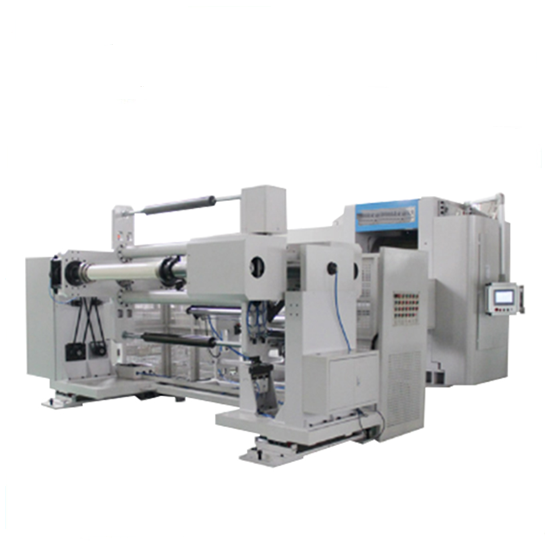
Calender Machine
Applications
Sodiumion batteries produced in these plants are suitable for:
* Gridscale energy storage systems
* Renewable energy buffering (solar, wind)
* Lowspeed electric vehicles
* Residential energy storage
* Backup power supply units
* Telecom base stations
* Smart appliances and lowtemperature environments
Their excellent performance in coldweather climates makes them particularly beneficial for northern regions.
Advantages
1.Resource Abundance
Sodium is plentiful and lowcost compared to lithium, reducing overall battery cost.
2.Thermal Stability
Sodiumion packs exhibit stronger thermal tolerance, lowering fire and explosion risks.
3.CostEffective Manufacturing
Sodium batteries often use aluminum current collectors for both anode and cathode, simplifying production and reducing material costs.
4.Environmental Sustainability
Sodium resources are evenly distributed worldwide, allowing more ecofriendly supply chains.
5.Flexibility with Existing LithiumIon Technology
Many steps in the sodium battery making process can reuse existing lithiumion battery manufacturing infrastructure, reducing transition costs.
6.High Safety Level
Improved structural stability and enhanced tolerance to overcharging and low temperatures.
Conclusion
Asodium battery making plant represents a technically advanced and strategically significant solution for the next generation of energy storage manufacturing. With its modular design, high automation, strong safety performance, and cost advantages, it is becoming a crucial component for industries aiming to shift from lithiumbased to more sustainable battery technologies. As global demand grows, these facilities will play a key role in accelerating largescale adoption of sodiumion batteries in both industrial and consumer applications.



 ipv6 ağı desteklenir
 tr
tr en
en fr
fr de
de ru
ru es
es pt
pt ko
ko pl
pl th
th


